The Ashley Book of Knots: A Comprehensive Guide
The Ashley Book of Knots, a monumental work, is readily available as a free PDF download through resources like the Internet Archive, offering access to its 3900 knots.
Reddit’s r/knots community frequently discusses the PDF version, praising it as a valuable resource and a window into historical knotting practices.

What is the Ashley Book of Knots?
The Ashley Book of Knots, penned by Clifford W. Ashley, stands as the definitive and most comprehensive guide to the world of knot tying. Published in 1944, this remarkable volume meticulously details approximately 3900 different knots, encompassing everything from simple hitches to complex applications within Marlinspike Seamanship.
It’s not merely a collection of diagrams; Ashley’s work delves into the history, usage, and origins of each knot, making it a fascinating exploration of maritime history and practical skills. Notably, the book is now widely accessible as a free PDF download, thanks to platforms like the Internet Archive, extending its reach to a new generation of knot enthusiasts.
The book’s enduring popularity is evidenced by ongoing discussions within online communities, such as the r/knots subreddit, where users share experiences and insights related to the PDF version and its wealth of information.
Historical Significance of the Book
The Ashley Book of Knots holds immense historical significance, representing a pivotal moment in the preservation of traditional knotting knowledge. Published during World War II, it captured a skillset rapidly fading with the decline of sail and traditional seamanship. Clifford W. Ashley dedicated years to collecting and documenting these knots, ensuring their survival for future generations.
The book’s impact extends beyond maritime practices; it offers a glimpse into a past where knot tying was an essential skill for everyday life. The recent availability of the book as a free PDF, particularly through the Internet Archive, has further amplified its historical reach, allowing wider access to this invaluable resource.
Online communities, like r/knots, recognize the book as a “window to the past,” celebrating Ashley’s dedication and the book’s role in reviving interest in knotting traditions.
Clifford W. Ashley (1881-1947) was an American artist, author, and a dedicated enthusiast of nautical lore. He wasn’t a professional sailor, but his lifelong fascination with knots led him to meticulously document nearly 3900 of them in his seminal work, The Ashley Book of Knots. Ashley’s approach was remarkably thorough, going beyond mere diagrams to include historical context and practical applications.
His dedication to preserving this knowledge is particularly noteworthy given the era in which he worked, as traditional seamanship skills were diminishing. The book’s enduring popularity, now amplified by its availability as a free PDF, is a testament to Ashley’s meticulous research and artistic skill.
The Internet Archive and communities like r/knots celebrate Ashley’s legacy, recognizing him as a pivotal figure in knotting history.
Content Overview: 3900 Knots
The Ashley Book of Knots boasts an astonishing catalog of approximately 3900 different knots, meticulously illustrated and described. This comprehensive collection ranges from simple, everyday hitches to complex and specialized knots used in Marlinspike Seamanship and various practical applications. The book doesn’t just present the knots; it details their uses, origins, and historical significance.
The sheer volume of content makes it an invaluable resource for both beginners and experienced knot tyers. The accessibility of the book as a free PDF, readily available through platforms like the Internet Archive, has broadened its reach considerably.
Online communities, such as r/knots, highlight the book’s depth and breadth, emphasizing its status as the definitive guide to knot tying.
Classification and Naming Conventions
Clifford W. Ashley’s meticulous approach extended beyond simply documenting knots; he established a unique system for their classification and naming. He precisely named and categorized each knot, even introducing new names where existing terminology was lacking. This systematic organization is a cornerstone of the book’s enduring value.
The PDF version of The Ashley Book of Knots preserves this original classification, allowing users to navigate the vast collection logically. The clarity of the naming conventions, despite the sheer number of knots, is frequently praised by users on platforms like r/knots.
This consistent methodology makes the book more than just a collection; it’s a structured reference guide, easily accessible even in its digital format.
Unique Naming System
Clifford W. Ashley didn’t simply adopt existing knot names; he often created his own, resulting in a remarkably unique naming system within The Ashley Book of Knots. This wasn’t arbitrary; names often reflected the knot’s function, origin, or a memorable characteristic. The PDF version faithfully reproduces these original designations.
Users accessing the book digitally, including those sharing experiences on r/knots, appreciate this consistency. While some names might seem unconventional, they contribute to the book’s comprehensive and precise nature. Ashley’s system avoids ambiguity, crucial when dealing with such a vast array of knots.
This innovative approach is a key reason why the book remains the definitive resource, even in its freely available PDF format.
Availability as a PDF
The Ashley Book of Knots, despite its age, enjoys remarkable accessibility thanks to its widespread availability as a PDF. This digital format has democratized access to this essential resource for knot enthusiasts worldwide. The Internet Archive is a primary source, offering a free download of the complete book, preserving Clifford W. Ashley’s work for future generations.

Discussions on platforms like r/knots highlight the convenience of the PDF version, allowing users to easily search, print sections, and study the 3900 knots on various devices. The digital copy faithfully replicates the original illustrations and detailed descriptions.
This accessibility ensures the book’s continued relevance and influence in the knot-tying community.
Free PDF Download Sources
Several online platforms offer free PDF downloads of The Ashley Book of Knots, making this invaluable resource readily available. The most prominent source is the Internet Archive, providing a digitized version for borrowing or permanent download. This ensures preservation and broad access to Clifford W. Ashley’s comprehensive work.

Reddit users on r/knots frequently share links and confirm the functionality of these download sources. While various websites may host the PDF, the Internet Archive remains the most reliable and legally sound option.
Users should exercise caution when downloading from unfamiliar sources to avoid potential malware. The Internet Archive offers a secure and trusted platform for accessing this classic text.
Internet Archive Access
The Internet Archive provides robust access to The Ashley Book of Knots, offering both borrowing and download options for the PDF version. Users can access the book through a web browser without needing any special software or account creation, though creating an account enhances the experience.
The platform allows for online reading, making it convenient for quick reference, or a full PDF download for offline study. The digitized copy faithfully reproduces the original illustrations and detailed descriptions of each knot.
The Internet Archive ensures the long-term preservation of this essential text, safeguarding Clifford W. Ashley’s legacy for future generations of knot enthusiasts. It’s a reliable and legal way to access this comprehensive guide.
Reddit Community Discussions
The Reddit community, particularly the r/knots subreddit, actively discusses The Ashley Book of Knots and its PDF availability. Users frequently share links to download sources, like the Internet Archive, and offer advice on navigating the book’s extensive content.
Discussions often revolve around specific knots, interpretations of Ashley’s diagrams, and practical applications. Many users highlight the book’s value as a historical document, showcasing knotting techniques from a bygone era.
Experiences with the PDF version are commonly shared, including tips for searching, printing, and using it alongside physical knot-tying practice. The subreddit serves as a vibrant hub for knot enthusiasts to connect and learn.
r/knots: A Hub for Knot Enthusiasts
r/knots on Reddit functions as a central online community for individuals passionate about knot tying, with The Ashley Book of Knots being a frequent topic of discussion. Members share their experiences, ask for help identifying knots, and showcase their own tying skills.
The subreddit is a valuable resource for accessing information about the book, including links to the free PDF version available on the Internet Archive. Users often post screenshots, diagrams, and videos related to knots featured in Ashley’s work.

It’s a place where both beginners and experienced knotters can connect, learn, and contribute to a shared appreciation for the art and science of knotting, fostering a collaborative learning environment.
User Experiences with the PDF Version
Reddit users frequently share their positive experiences with the PDF version of The Ashley Book of Knots, highlighting its convenience and accessibility. Many appreciate having the entire book available digitally, allowing them to easily search for specific knots and diagrams.
Some users mention using the PDF on tablets or e-readers while practicing knot tying, finding it a practical alternative to the physical book. Others praise the Internet Archive for preserving and providing free access to this important resource.

While some note the older scanning quality of the PDF, the vast majority consider it a remarkably useful and valuable tool for learning and referencing knotting techniques, making it a beloved resource within the r/knots community.
Practical Applications Covered
The Ashley Book of Knots meticulously details a vast range of practical applications, extending far beyond recreational knot tying. The book comprehensively covers Marlinspike Seamanship, the art of working with rope and cordage traditionally practiced by sailors.
It delves into detailed instructions for working with rope, line, and plating, showcasing knots essential for various maritime tasks – from securing cargo to creating complex rigging. Beyond nautical uses, the book illustrates knots applicable to camping, climbing, fishing, and numerous other outdoor pursuits.
The PDF version maintains this wealth of practical knowledge, allowing users to readily access and learn techniques applicable to a diverse array of real-world scenarios, solidifying its enduring relevance.
Marlinspike Seamanship
Marlinspike Seamanship, a core focus within The Ashley Book of Knots, represents the traditional skillset of sailors concerning ropework. The book meticulously documents countless knots vital for ship handling, sail maintenance, and general maritime operations.
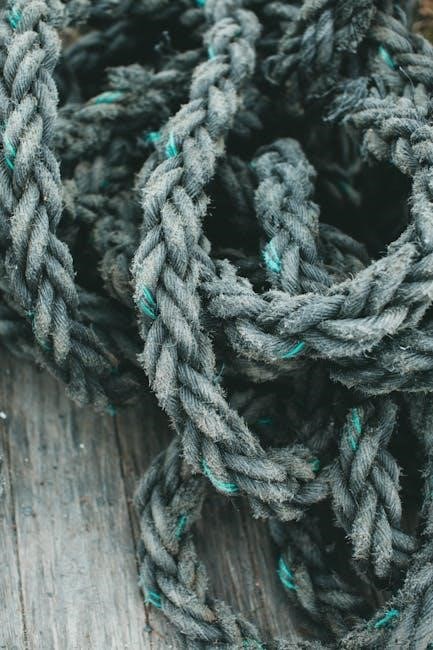
From essential bends and hitches for joining lines to complex splices for creating permanent connections, the PDF version preserves this historical expertise. It details techniques for creating everything from simple lashings to elaborate decorative work using marlinspike tools.
The book’s detailed illustrations and clear instructions, faithfully reproduced in the PDF, allow modern readers to understand and replicate these time-honored seafaring skills, ensuring the legacy of Marlinspike Seamanship endures.
Working with Rope, Line, and Plating
The Ashley Book of Knots, accessible as a PDF, comprehensively covers techniques for working with rope, line, and plating – materials fundamental to countless crafts and industries. Beyond nautical applications, the book details knots useful in everything from camping and climbing to decorative macramé and even early forms of engineering.
The PDF format allows easy access to detailed instructions on how to manipulate various cordage types, including natural fibers like hemp and manila, as well as modern synthetic lines. It illustrates methods for securing loads, creating loops, and forming strong, reliable connections.
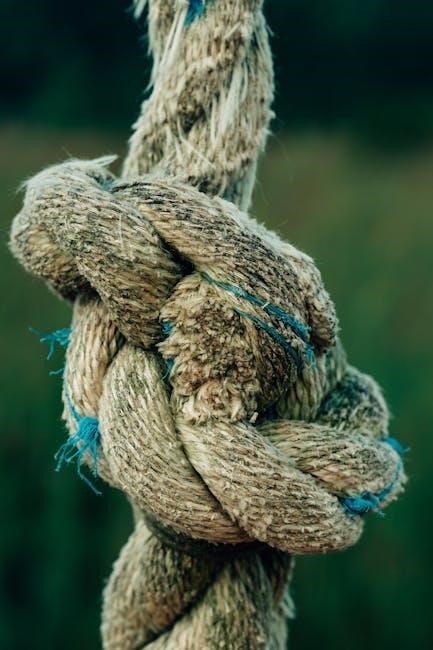
Furthermore, the book extends to techniques involving “plating” – the interlacing of ropes or lines to create mats, baskets, and other woven structures, all readily available within the digital PDF copy.
The Book’s Impact on Knot Tying
The Ashley Book of Knots profoundly impacted knot tying, becoming the definitive resource for both traditional and modern practitioners. Its detailed illustrations and standardized naming system, now easily accessible via the PDF version, revolutionized the field.
Before Ashley’s work, knot knowledge was often fragmented and passed down orally. The book consolidated this information, reviving interest in a skill that was fading with industrialization. The readily available PDF has further democratized access to this knowledge.
The book’s influence extends to modern knotting practices, serving as a foundation for advancements in areas like climbing, sailing, and rescue operations. The PDF format ensures its continued relevance for generations of knot enthusiasts.
Reviving Interest in Traditional Knotting
The Ashley Book of Knots played a crucial role in reviving interest in traditional knotting techniques, which were declining due to modernization. Before its publication, much of this knowledge existed only in fragmented, oral traditions, slowly being lost to time.
Ashley meticulously documented nearly 3900 knots, preserving a wealth of maritime and practical skills. The book’s comprehensive nature and detailed illustrations sparked a renewed appreciation for the art and utility of knot tying. Now, with the convenient PDF version, accessibility is greatly increased.
The PDF’s widespread availability has further fueled this revival, allowing enthusiasts worldwide to study and practice these historical techniques, ensuring their survival for future generations. It’s a testament to Ashley’s foresight.
Influence on Modern Knotting Practices
The Ashley Book of Knots continues to profoundly influence modern knotting practices, serving as a foundational text for both recreational and professional knot tiers. Its standardized naming conventions and detailed diagrams have become the industry standard, ensuring clear communication and understanding.
Even with the advent of new materials and techniques, the principles outlined in the book remain relevant. The readily available PDF version allows contemporary practitioners to easily reference and adapt traditional knots for modern applications, from climbing and sailing to crafting and rescue operations.
Online communities, like r/knots, actively discuss and build upon Ashley’s work, demonstrating its enduring legacy and ongoing impact on the field. The PDF facilitates this collaborative learning.
The New Bedford Whaling Museum Exhibition
The New Bedford Whaling Museum proudly hosts exhibitions celebrating Clifford W. Ashley’s legacy and the enduring impact of The Ashley Book of Knots. These displays showcase Ashley’s original artwork, research materials, and examples of the intricate knots documented within the book.
The museum recognizes the book as the “most famous knot book ever created,” highlighting its significance as both a technical manual and a cultural artifact. Access to the PDF version of the book complements the physical exhibits, allowing visitors to delve deeper into Ashley’s work.
These exhibitions aim to educate the public about the history of knotting, seamanship, and Ashley’s dedication to preserving this traditional craft. The PDF serves as a valuable resource for continued learning beyond the museum walls.
Celebrating Clifford W. Ashley’s Legacy
Clifford W. Ashley’s dedication to documenting knots is celebrated through various initiatives, including the widespread availability of The Ashley Book of Knots as a free PDF. This digital accessibility ensures his work continues to inspire and educate generations of knot enthusiasts.
The PDF version allows for easy sharing and study of Ashley’s meticulous illustrations and detailed descriptions of over 3900 knots. Online communities, like r/knots on Reddit, actively promote and discuss the PDF, fostering a collaborative learning environment.
Recognizing Ashley’s contribution to maritime history and traditional crafts, institutions like the New Bedford Whaling Museum honor his legacy through exhibitions and educational programs, further amplified by the book’s accessible PDF format.
Book as a Window to the Past
The Ashley Book of Knots, particularly in its readily available PDF format, serves as a remarkable portal to a time when knot tying was a crucial skill for sailors, craftsmen, and everyday individuals. The book meticulously documents techniques passed down through generations, preserving a wealth of practical knowledge.
The PDF allows modern readers to explore the historical context of each knot, understanding its origins and traditional uses. It’s a tangible connection to a past where resourcefulness and knotting expertise were highly valued. Online discussions, like those on r/knots, highlight this aspect.
Through the PDF, Ashley’s work isn’t just a technical manual; it’s a cultural artifact, offering insights into the lives and skills of those who relied on these knots for survival and trade.

Comparison to Other Knot Books
While numerous knot books exist, The Ashley Book of Knots, especially in its accessible PDF form, remains unparalleled in its scope and detail. Many contemporary guides focus on specific applications – sailing, climbing, or decorative knotting – but Ashley’s work is comprehensively encyclopedic, cataloging nearly 3900 knots.
Other books often simplify instructions or omit historical context. The PDF version of Ashley’s book retains his original illustrations and detailed explanations, offering a richer learning experience. It’s not merely a “how-to” guide, but a historical record.
The sheer volume of knots and the unique naming system distinguish it. While other resources may be more user-friendly for beginners, none match Ashley’s depth, making the PDF a cornerstone for serious knot enthusiasts.
Understanding the Book’s Structure
The Ashley Book of Knots, even in PDF format, maintains a distinct organizational structure. It isn’t arranged by application, but rather by knot ‘families’ based on how the knot is formed. This can initially seem unconventional, but allows for a deeper understanding of knot theory.
Each knot entry within the PDF includes a clear illustration, a detailed tying sequence, and notes on its history, uses, and variations. Ashley’s unique naming system, while sometimes complex, provides a consistent framework for identification.
Navigating the PDF effectively requires patience and a willingness to explore. The index is crucial, and understanding Ashley’s classification system unlocks the book’s full potential. It’s a resource best approached with a spirit of discovery.
Target Audience: From Beginners to Experts
The Ashley Book of Knots, even as a PDF, caters to a remarkably broad audience. Beginners will find foundational knots clearly illustrated, though the sheer volume can be initially daunting. The detailed instructions, however, are invaluable for learning proper technique.
Intermediate knot tyers will appreciate the depth of coverage and the exploration of variations. The PDF format allows for easy searching and cross-referencing, aiding in more complex projects.
Experts will value the historical context and the inclusion of obscure or forgotten knots. The book serves as a comprehensive reference, even in its digital PDF form, solidifying its place as the definitive guide for all skill levels.
The Book’s Continued Relevance Today
Despite being published decades ago, The Ashley Book of Knots maintains significant relevance, especially with its accessibility as a PDF. While modern materials and techniques have emerged, the fundamental principles of knot tying remain constant.
The PDF version fosters a renewed interest in traditional knotting skills, connecting contemporary enthusiasts with a rich history. Online communities, like r/knots, demonstrate ongoing engagement with the book’s content.
Furthermore, the book’s comprehensive nature ensures it remains a valuable resource for practical applications, from sailing and climbing to crafting and everyday problem-solving. The readily available PDF ensures its legacy continues for generations.